About Chord Barn
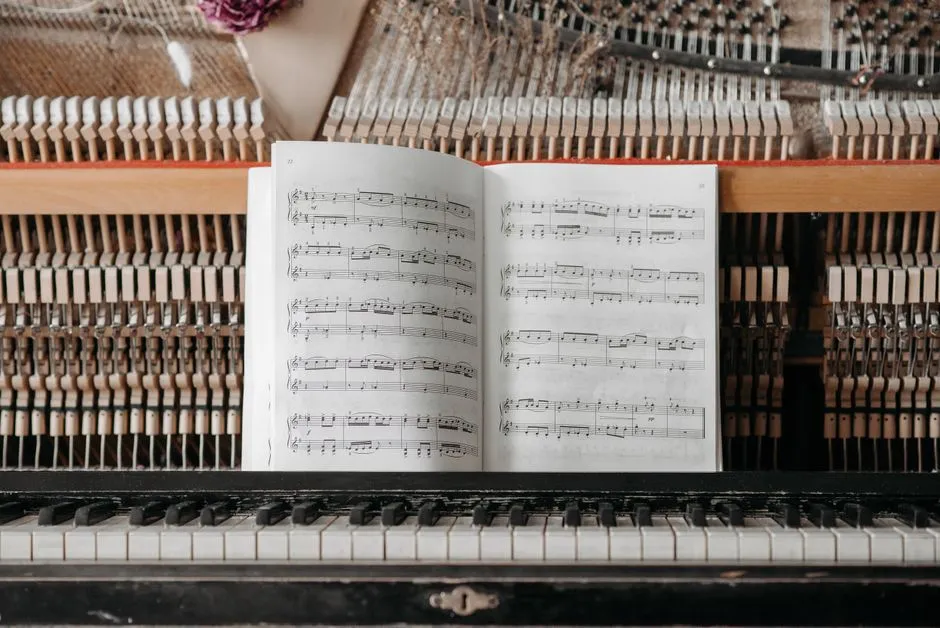
Chord Barn is a free, browseable library of public-domain classical and baroque piano sheet music. Every score in the catalog has entered the public domain — meaning you can legally download, print, share, perform, teach from, record, and even re-publish the music without paying a cent or asking permission.
The catalog focuses tightly on solo keyboard repertoire from roughly 1685 to 1925: the Baroque suites and fugues of Bach and Handel; the Classical sonatas of Haydn, Mozart, and the early Beethoven; the Romantic miniatures of Chopin, Schumann, Schubert, Mendelssohn, and Brahms; the late-Romantic and Impressionist works of Liszt, Rachmaninoff, Debussy, Ravel, and Scriabin. We do not include orchestral, chamber, or vocal scores — only what a pianist can play, alone, at one instrument.
Where the scores come from
Our catalog draws from the IMSLP / Petrucci Music Library, the world's largest open-access archive of public-domain music notation, supplemented by entries from the OpenScore project on MuseScore and the Werner Icking Music Archive. Each piece links back to the canonical source for the highest-resolution PDF we can find, and we credit the editor and engraving where that information is available.
How the catalog is organised
Every piece is sorted by composer, by era, and by difficulty level. You can browse the full library alphabetically, drop into a single composer's page to see everything we have by them, or filter by era to study the Baroque suite or the Romantic character piece in depth. A search field at the top of every page lets you find a work by title, opus number, key, or composer in a single keystroke.
Difficulty levels
We mark each piece beginner, intermediate, advanced, or virtuoso. These are rough guides and not gradings against any conservatory syllabus. A "beginner" Bach minuet is approachable for a serious second-year student; a "virtuoso" Liszt étude is a recital-level concert work. If you are studying with a teacher, ask them to recommend a starting place — the catalog is large and intentionally varied.
What Chord Barn is not
We do not host or sell modern copyrighted editions, urtext editions, or commercially-licensed transcriptions. We do not sell anything at all. We display advertisements to cover hosting, but the catalog itself, the metadata, and every score linked from it are free in the strictest sense of the word.
A note on editions
Public-domain status applies to the underlying composition, not to every printed edition of it. The PDFs linked from this site are themselves either in the public domain in their country of publication or freely re-distributable under the source's terms. If you are publishing a recording or printed edition derived from these scores, the underlying notes are free for you to use; please credit the editor whose engraving you reference if you reproduce it.
Why the focus on piano?
The piano is the instrument with the deepest, broadest public-domain catalog in Western music. Almost every great composer between Bach and Debussy wrote a substantial body of keyboard work, and most of it is now legally free. Building a focused library — rather than a generalist score archive — lets us make the experience of finding, comparing, and studying piano music as fast and as pleasant as we can.
If you have a correction, a missing piece you'd like to see added, or a high-quality public-domain edition you think should be linked, please write to us through the contact page.
Open Opus composer & works catalog (added 2026-09-11)
Source. Open Opus, a collaborative classical-music
metadata project (openopus-org/openopus_api on
GitHub), via its public REST dump endpoints: the full composer list
(composer/list/name/all.json, 220 composers) and the full works dump
(work/dump.json, 220 composer groups / 24,975 works, API status reported
"rows": 25195 at the database level with 24,975 present in the delivered JSON).
Fetched 2026-09-11; this is a one-time snapshot, not a live or auto-refreshing feed.
Licence. Open Opus's own homepage states: “And all data is in the public domain as well. Just download it!” — i.e. CC0 / public domain, no registration or API key required, no attribution legally required. We credit Open Opus by name throughout anyway as a courtesy and for verifiability.
Join method. Open Opus's 220-composer table was matched against Chord Barn's existing 20-composer roster by an exact, case-sensitive match on full composer name (e.g. “Johann Sebastian Bach” = “Johann Sebastian Bach”). A name match was used deliberately here, rather than a numeric identifier, because the key space is tiny (20 rows against 220) and every candidate match was checked individually; it would not be used at a larger scale. 19 of Chord Barn's 20 composers matched exactly; Chord Barn's “Joseph Haydn” did not match Open Opus's “Franz Joseph Haydn” (different string), so the two were left as separate, unmerged pages rather than guessed into one. The remaining 201 Open Opus composers (including “Franz Joseph Haydn”) each received a new composer page using Chord Barn's existing composer-page shell.
Counts. 220 Open Opus composers total · 19 matched an existing Chord Barn composer page by exact name and were augmented with an “Open Opus catalog” works section · 201 did not match and became new composer pages · 24975 Open Opus works in total, all rendered (none dropped, deduped, or merged) across those 220 composer pages, paginated at 200 works per page as additional sub-pages when a composer's list ran longer than one page. Works are catalog metadata only — Chord Barn does not create a page per work, since 24,975 works is far above this project's per-record-page threshold; works are shown only inside their composer's aggregate list.
Fields rendered. Composer: full name, birth year, death year (when known), Open Opus's own epoch/period classification, and a hotlinked (not rehosted) portrait image where Open Opus supplies one. Work: title, subtitle (when non-blank), and genre (Keyboard / Orchestral / Chamber / Vocal / Stage). Blank fields (e.g. a work with no subtitle) are omitted, never filled in.
Fields deliberately withheld. Open Opus's internal “popular” and “recommended” editorial flags are not rendered (out of scope for this catalog). Composer nationality is not part of Open Opus's schema and is not shown on the new Open Opus composer pages (Chord Barn's existing 20 composer pages already carry a hand-written nationality field from their original IMSLP-era authoring, which is untouched). No biography is invented for the 201 new composers — Open Opus supplies no biographical prose, and Chord Barn does not write one; those pages show catalog facts only. We also reviewed the LICENSE-POLICY / PII-POLICY amendments in force for this wave (OGL v3 tier and the NPPES facility-address carve-out) and found neither applicable: Open Opus is a CC0 dataset with no government-facility or named-individual address/phone fields of any kind.
What this does not change. The 1,392 existing IMSLP/Petrucci-sourced piece pages, their PDF links, difficulty ratings, and catalog numbers are untouched. Open Opus's work titles are catalog entries, not downloadable score editions, and are labelled as such everywhere they appear so they are never mistaken for, or presented as validating, the existing IMSLP-sourced score catalog.
Corrections. If a name, date, or epoch looks wrong, tell us via the contact page — include the page URL, the field you believe is wrong, what you think the correct value is, and a source. We compare against Open Opus's own published data before changing anything sourced from it.